A Homeowner’s Guide to Comfort, Safety, and System Efficiency
When we think about our home’s heating and cooling system, most of us picture the furnace in the basement, the outdoor heat pump or AC unit humming along outside, or maybe even the thermostat on the wall. But here’s the funny thing: many of the biggest problems homeowners face with airflow, comfort, and even equipment failure don’t start at the furnace or the thermostat. They start at two of the simplest, easiest-to-overlook parts of your system:
1. The registers (vents) inside your home
2. The exhaust and intake pipes outside your home
These components might look small and insignificant, but they play a huge role in your comfort, your equipment’s health, and even your monthly energy bills.
Today, we’re going to dig deep—really deep—into why keeping your indoor registers fully open and your outdoor exhaust and intake pipes free of snow, ice, lint, and debris is essential for every home.
This isn’t just a “good habit” or a “recommendation”—it’s a major part of how your HVAC system breathes. And as simple as it sounds, making sure air can move properly through your home is one of the most powerful ways to protect your equipment and keep your home comfortable.
Let’s get into it.
1. Your HVAC System is Designed for Balanced Airflow
Here’s something many homeowners don’t realize:
Your heating and cooling system is engineered—very precisely—to move a specific amount of air in and out of the system. When that airflow is blocked, restricted, or suffocated, the system can’t operate the way it’s supposed to.
Think of it this way:
Your furnace or heat pump is like a pair of lungs.
Your registers and returns are its nose and mouth.
Your exhaust and intake pipes are its throat.
If any part is blocked, the whole system struggles.
When airflow is limited, here’s what happens behind the scenes:
- The furnace can overheat
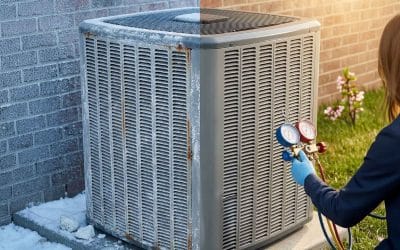
- The heat pump can ice up
- The AC coil can freeze
- The blower motor has to work harder, wearing down faster
- The system may short cycle (turning on/off rapidly)
- Energy bills jump up
- Comfort levels drop
- Long-term damage becomes more likely
All from something as simple as a vent being closed or a pipe outside being buried in snow.
2. Why Keeping Your Registers Fully Open Matters
A lot of homeowners close vents thinking they’re saving energy, especially in unused rooms. It makes sense in theory—but not in practice.
Closing Registers Doesn’t Save Money — It Causes Problems
Your HVAC system doesn’t know you closed a vent. It still pushes out the same amount of air. By shutting vents, you’re forcing the system to work against pressure—which is exactly what damages components.
What Happens When Vents Are Closed?
Here’s the real-world impact:
✔ Increased pressure in your ductwork
Air has nowhere to go, so it pushes harder against the system. This can lead to duct leaks, blower motor strain, and reduced airflow everywhere else.
✔ Overheating or freezing of your system
In heating mode, restricted airflow can cause your furnace to overheat and shut down as a safety precaution.
In cooling mode, it can cause your AC coil to freeze into a block of ice.
✔ Uneven temperatures throughout the house
Closed registers actually make your home less comfortable, not more. One room becomes an oven, another becomes an icebox.
✔ Higher energy bills
When airflow is blocked, your system struggles. It has to work longer and harder to hit the temperature you want.
✔ Stress on the blower motor
Motors can burn out prematurely when constantly fighting restricted airflow. A blower motor replacement is far more expensive than keeping your registers open.
3. Why You Should Avoid Closing Vents for Room-by-Room Control
Many people think closing vents is a good way to direct more air to certain rooms. Unfortunately, the HVAC system wasn’t designed for that.
If you want better control over individual rooms, the right solution is:
- Proper duct balancing
- Zoning systems (with multiple thermostats)
- ECM variable blowers
- Redirecting dampers professionally
- Fixing air drafts and insulation gaps
Closing vents is never the correct way to adjust comfort. In fact, it can reduce comfort in the long run.
4. What Happens When Return Vents Are Blocked
Supply vents push air out. Return vents pull air in.
Blocking return vents is one of the fastest ways to disrupt proper system balance.
This often occurs when:
- Furniture is pushed against the return grille
- Curtains cover it
- It’s painted shut
- Kids’ toys block it
- The vent is clogged with dust or pet hair
When returns are blocked:
- The furnace can’t breathe properly
- Suction increases, stressing the blower
- Airflow to the entire home becomes weaker
- Energy usage increases
- Air quality drops
In extreme cases, the system may fail to ignite or operate safely because it cannot pull in enough air.
5. Why Outdoor Exhaust & Intake Pipes Must Be Clear
Now let’s talk about one of the biggest winter issues we see every year: blocked outdoor exhausts and intake pipes.
If you have a high-efficiency furnace, heat pump, tankless water heater, or HRV/ERV, it likely has PVC pipes that run outside your home. These pipes bring fresh air in and expel combustion gases.
When these pipes are blocked by:
- Snow
- Ice buildup
- Leaves
- Debris
- Lint
- Insects or nests
- Plastic bags or garbage blown by wind
… your equipment can’t run safely or properly.
What Happens When the Intake Pipe Is Blocked?
The system can’t pull in enough fresh air. This causes:
- Furnace shutdown
- Error codes
- Inconsistent operation
- Poor combustion
- Carbon buildup inside components
- Higher risks of CO issues
What Happens When the Exhaust Pipe Is Blocked?
The system can’t push out harmful gases correctly. This can cause:
- Immediate furnace shutdown
- Carbon monoxide backup
- Safety lockouts
- Ice forming at the exhaust outlet
- Condensation dripping back into the furnace
- Major safety hazards
These shutdowns are your system trying to protect you. High-efficiency furnaces are extremely sensitive to blocked vents by design — and that’s a good thing.
6. Wintertime: The #1 Season for Blocked Exhausts
Every winter, we get a surge of calls that go something like:
“My furnace stopped working out of nowhere.”
“My thermostat is blank.”
“I’m getting error codes.”
“The heat pump is running non-stop.”
“It keeps shutting off and starting again.”
And nine times out of ten, when we arrive at the home…
the outdoor exhaust and intake pipes are buried in snow.
Even a small drift can block the opening, especially during:
- Storms
- High winds
- Temperature swings
- Freezing rain
- Heavy snowfall
And homeowners are often surprised that their system won’t run at all — but again, that’s the safety system doing exactly what it’s designed to do.
7. Avoiding Condensation & Ice Build-Up
High-efficiency furnaces release warm, moist air from the exhaust. In cold weather, that moisture freezes quickly.
This creates an ice “collar” around the exhaust that can eventually choke off airflow.
If this happens:
- Your furnace may shut down
- Your heat pump may run non-stop trying to compensate
- You may see dripping, puddles, or frost on the pipes
- You may get error codes on your thermostat
A simple 10-second habit of checking the exhaust after snowfalls or cold snaps can prevent hours without heat.
8. The Hidden Dangers of Blocked Exhausts
Even though modern HVAC systems have multiple safety sensors to prevent carbon monoxide from entering your home, blocked exhausts can still create undesirable situations.
These can include:
- Condensation backing up into the furnace
- Premature component failure
- Rust forming in the heat exchanger area
- Shutdowns during extreme cold
- Dangerous ice buildup around the vent
- CO entering the home if a failure occurs
This is why we always recommend:
- Keeping snow and debris at least 3 feet away
- Ensuring vents are above anticipated snow levels
- Never enclosing a vent area with lattice, fences, or storage
- Inspecting after storms or freezing rain
9. Signs Your Registers or Exhausts Might Be Blocked
If you experience any of the following, airflow might be the culprit:
- Certain rooms always cold or hot
- Weak airflow from some vents
- Your system runs constantly
- Strange noises from ductwork
- Furnace shuts down randomly
- Thermostat can’t reach set temperature
- Ice on the AC coil or heat pump
- Blower sounds louder than usual
- Furnace smells “hot”
- Error codes on your furnace or thermostat
Before assuming it’s a major mechanical problem, a quick check of all vents and exhaust pipes is a great first step.
10. Simple Homeowner Checklist
Here’s an easy routine you can use every month — or after every major snowfall.
Inside the Home:
- All supply registers fully open
- Nothing blocking return vents
- Dust or pet hair cleaned off grilles
- Furniture placed away from vents
- No rugs covering floor vents
- Vents in basements and crawlspaces open
Outside the Home:
- Furnace exhaust pipe clear
- Furnace intake pipe clear
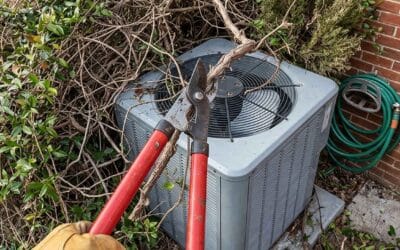
- Heat pump/AC unit free of snow, leaves, grass clippings
- No ice around exhaust termination
- No debris caught on the outlet
- Heat pump airflow not blocked by snowbanks
This takes 1–2 minutes and can save you a service call — and days of discomfort.
11. How These Small Habits Protect Your Equipment
Keeping registers and exhausts clear:
✔ Extends the lifespan of your furnace and AC
Less strain = longer life.
✔ Reduces your energy bills
Free airflow means the system doesn’t struggle.
✔ Improves comfort consistently throughout the home
Every room gets proper air distribution.
✔ Helps prevent emergency shutdowns
Especially in winter.
✔ Protects blower motors, heat exchangers, and coils
These are expensive to replace—many thousands of dollars.
✔ Improves indoor air quality
Better airflow = better filtration and circulation.
✔ Keeps warranties valid
Many manufacturers state that airflow restrictions can void warranty coverage.
12. And Yes — Your Furnace Filter Still Matters Too
Airflow doesn’t start at the furnace — it starts at the filter.
A clogged filter is one of the fastest ways to overheat a system, freeze a coil, or cause short cycling.
We recommend:
- Checking filters every 30 days
- Changing them every 60–90 days (depending on type)
- Changing them immediately if you have pets, allergies, or renovations
Registers + exhausts + filter = happy furnace.
13. When to Call a Professional
While homeowners can keep an eye on vents and exhausts, there are times when it’s best to let a trained technician take a look—especially for:
- Repeated furnace shutdowns
- Error codes that keep returning
- Ice buildup that won’t go away
- Uneven heating despite open vents
- Unusual odors
- Loud or unusual noises
- Suspected CO issues
- Weak airflow across the entire home
A blocked vent is the easy fix.
A deeper system issue needs professional diagnosis.
Final Thoughts: Small Habits Make a Big Difference
Being a homeowner comes with a lot of responsibilities, but keeping your registers open and your outdoor exhausts clear is one of the simplest and most effective ways to ensure:
- Better comfort
- Safer operation
- Lower energy bills
- Longer equipment lifespan
- Fewer breakdowns
- Less stress during winter storms
Think of your HVAC system like a living, breathing part of your home.
When we let it breathe freely, it takes care of us.
At Able Air Conditioning & Heating, we see how often airflow issues lead to unnecessary service calls, costly repairs, and cold nights without heat. The good news? Most of these issues can be prevented with simple, regular checks.
If you ever have questions about your system, your vents, or anything you’re unsure about, we’re always here to help.
Any reason, any season — we’ve got you covered!
Contact Able Air Conditioning & Heating today!
With over 20 years of experience in the HVAC industry, Able Air Conditioning & Heating proudly serves homeowners and businesses in Kitchener, Waterloo, Cambridge, Guelph, and nearby areas. Our award-winning team of licensed technicians is dedicated to providing reliable equipment and service our clients can trust.
Follow us on Facebook and Instagram for expert tips, helpful resources, and our latest promotions.