When most homeowners think about comfort, they think about temperature. Is it warm enough in winter? Cool enough in summer? But there’s another factor that’s just as important—and often completely overlooked: humidity.
Humidity affects how warm or cool your home feels, how healthy your indoor air is, how long your furniture and floors last, and even how well your HVAC system performs.
Too little humidity can leave you dry, uncomfortable, and sick more often. Too much humidity can cause musty smells, condensation, and even hidden mold.
This is where humidifiers and proper humidity control come in. When done right, they quietly improve your home in ways you’ll notice every single day—even if you don’t realize why.
WHAT IS HUMIDITY (AND WHY SHOULD YOU CARE)?
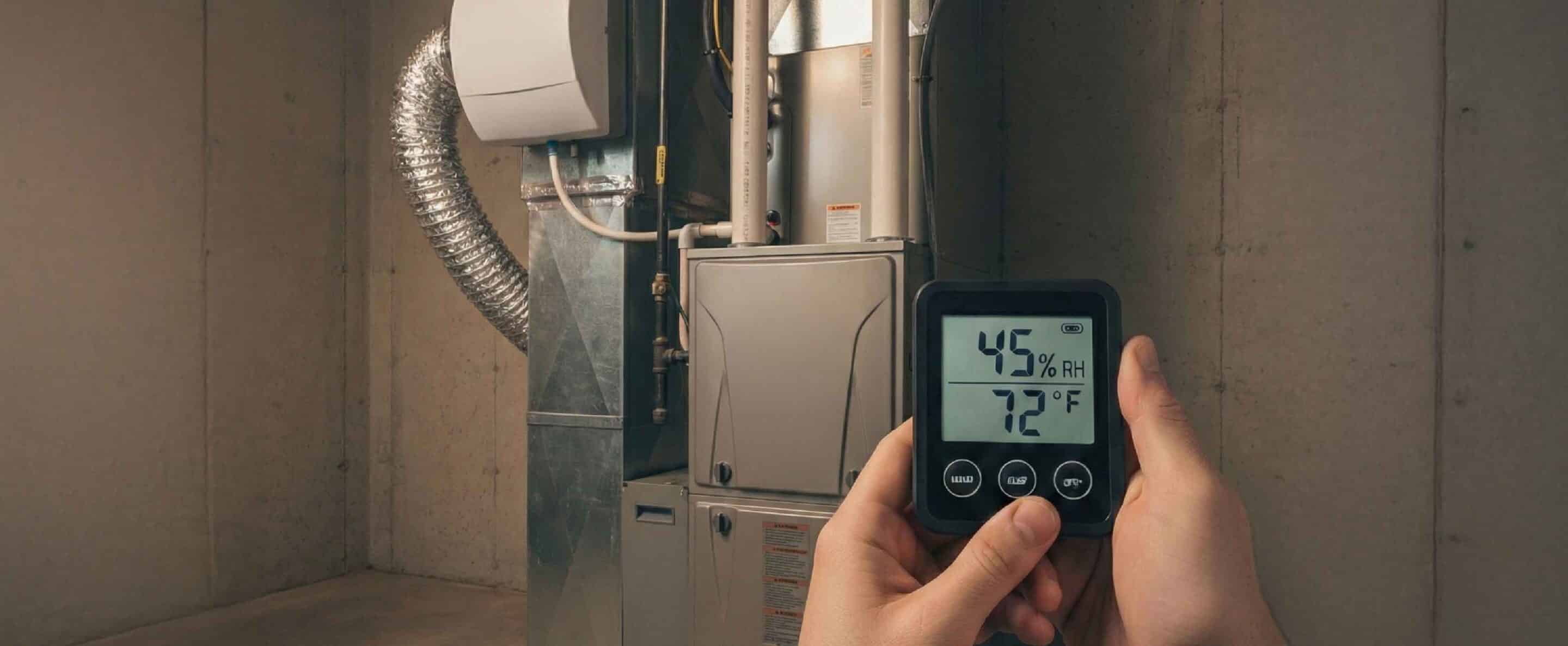
Humidity refers to the amount of moisture (water vapor) in the air. In homes, it’s typically measured as relative humidity (RH)—a percentage that tells you how much moisture the air is holding compared to how much it could hold at that temperature.
Most experts agree that the ideal indoor humidity level is:
• 30–40% in winter
• 40–50% in summer
Anything outside that range can start causing problems.
LOW HUMIDITY – TOO DRY
Dry indoor air is extremely common during Canadian winters, especially in homes heated by forced-air furnaces. Symptoms often include dry skin and lips, irritated sinuses, sore throats, frequent colds, static electricity, and cracking hardwood floors or furniture. Many homeowners also feel colder than the thermostat reading suggests because dry air does not retain heat well.
HIGH HUMIDITY – TOO MOIST
Excess humidity is more common in summer or in homes with poor ventilation. Signs include condensation on windows, musty smells, mold or mildew growth, and increased dust mites. High humidity can damage building materials and significantly reduce indoor air quality.
WHY CANADIAN HOMES STRUGGLE WITH HUMIDITY
Canada’s climate creates extreme seasonal swings. In winter, cold outdoor air contains very little moisture. Once that air is heated indoors, humidity levels can drop below 20%, which is far from comfortable or healthy. In summer, warm humid air combined with poor ventilation or oversized air conditioners can trap excess moisture inside the home.
WHAT IS A HUMIDIFIER?
A humidifier is a device designed to add controlled moisture to the air to maintain healthy indoor humidity levels. While portable room humidifiers are common, they typically only treat one room and require frequent cleaning and refilling.
Whole-home humidifiers are installed directly onto a forced-air HVAC system and distribute moisture evenly throughout the house. These systems are automatic, low maintenance, and far more effective for long-term comfort.
TYPES OF WHOLE-HOME HUMIDIFIERS
Bypass humidifiers use the furnace’s airflow to pass warm air over a water panel. They are reliable and cost-effective for small to mid-sized homes.
Fan-powered humidifiers include an internal fan to improve moisture distribution, making them suitable for larger homes.
Steam humidifiers boil water and inject steam directly into the air stream. They offer the most precise control and work even when the furnace is not actively heating, making them ideal for newer, tightly sealed homes.
BENEFITS OF PROPER HUMIDITY CONTROL
Balanced humidity supports respiratory health, reduces the spread of viruses, and helps alleviate allergy and asthma symptoms. It also improves comfort by allowing air to feel warmer at lower temperatures, potentially lowering heating costs.
Proper humidity protects hardwood floors, furniture, musical instruments, and even electronics from damage caused by overly dry air. It also significantly reduces static electricity throughout the home.
CAN YOU HAVE TOO MUCH HUMIDITY?
Yes. Excess humidity can lead to mold growth, window condensation, structural damage, and poor indoor air quality. This is why professional installation with an automatic humidistat is critical—it ensures humidity levels adjust safely based on outdoor conditions.
HUMIDIFIERS VS DEHUMIDIFIERS
Many Canadian homes benefit from both. Humidifiers are essential during winter months, while dehumidifiers help manage moisture in summer, basements, and older homes. Some advanced systems integrate both for year-round balance.
COMMON HUMIDIFIER MYTHS
More humidity is not always better. Portable humidifiers rarely solve whole-home issues, and properly designed systems do not cause mold—poor installation and lack of control do.
MAINTENANCE MATTERS
Annual maintenance typically includes replacing the water panel, inspecting drain lines, cleaning mineral buildup, and confirming humidistat calibration. When maintained properly, humidifiers are safe, clean, and reliable.
SIGNS YOUR HOME NEEDS BETTER HUMIDITY CONTROL
Persistent dryness, frequent static shocks, cracking wood surfaces, worsening indoor allergies, and window condensation are all signs that humidity is out of balance.
FINAL THOUGHTS
Humidity control is one of the most overlooked upgrades a homeowner can make. It improves comfort, protects your home, and supports healthier indoor air—quietly working in the background every day.
When humidity is balanced, homes feel warmer, healthier, and more comfortable overall.
Interested in adding a whole-home humidifier into your home?
Contact Able Air Conditioning & Heating today!
With over 20 years of experience in the HVAC industry, Able Air Conditioning & Heating proudly serves homeowners and businesses in Kitchener, Waterloo, Cambridge, Guelph, and nearby areas. Our award-winning team of licensed technicians is dedicated to providing reliable equipment and service our clients can trust.
Follow us on Facebook and Instagram for expert tips, helpful resources, and our latest promotions.